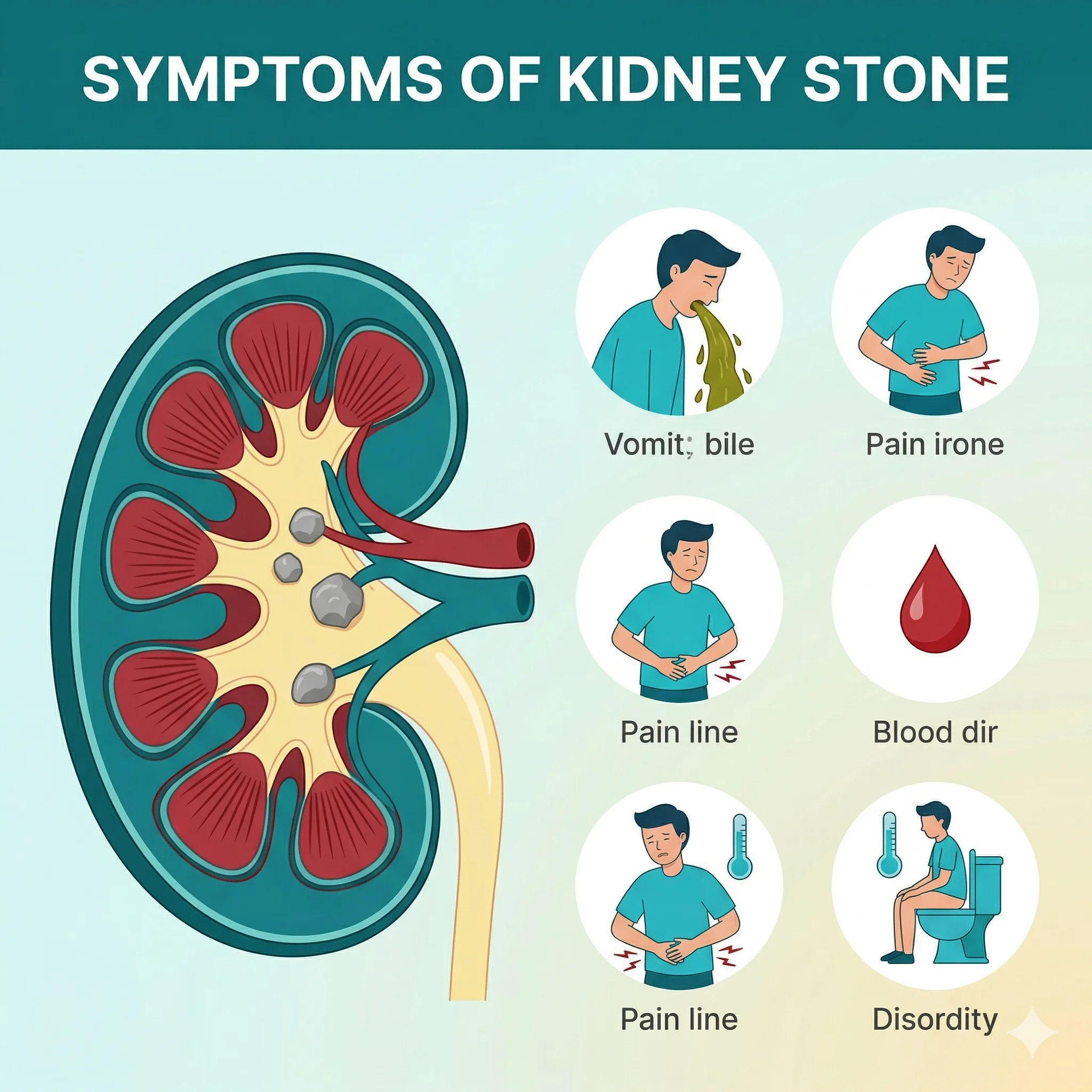
Kidney stone symptoms can vary depending on the stone’s size, location, and movement within the urinary tract.
Below are the hallmark signs and sensations you should watch for.
Severe Pain (Renal Colic)
The most recognized symptom is renal colic, sudden, sharp pain that comes in waves.
It often starts in the side or back (flank) and radiates to the lower abdomen or groin.
Pain may:
- Come and go in intensity
- Make it hard to find a comfortable position
- Occur suddenly, even waking you from sleep
Clinical research (Cleveland Clinic, 2024) notes that pain peaks when the stone moves into the ureter, blocking urine flow.
Blood in Urine (Hematuria)
Another classic symptom is blood in the urine, giving it a pink, red, or brown tint.
This happens as the stone irritates or scratches the urinary tract lining.
- Visible hematuria: Color change in urine
- Microscopic hematuria: Detected only in lab tests
If bleeding is persistent or accompanied by clots, see a doctor immediately.
Frequent Urination or Urgency
You may feel the need to urinate more often than usual, especially if the stone is near the bladder.
Sometimes, only a few drops come out despite the strong urge.
This happens because the stone irritates the bladder wall or urethra, mimicking infection symptoms.
Pain During Urination
Burning or stinging sensations during urination can occur when the stone is in the lower urinary tract.
This can be confused with a urinary tract infection (UTI); both can co-exist, making it important to get tested.
Nausea and Vomiting
Severe pain from kidney stones often triggers nausea and vomiting due to the shared nerve connections between the kidneys and the gastrointestinal tract.
According to the Mayo Clinic, this is a common autonomic reaction to intense pain or obstruction.
Cloudy or Foul-Smelling Urine
This symptom usually indicates a secondary infection.
Bacteria in stagnant urine can multiply quickly when the urinary flow is blocked.
If your urine looks murky, thick, or smells bad, consult a urologist promptly.
Fever and Chills
A fever above 101°F (38.3°C) combined with chills can signal a kidney infection (pyelonephritis) a medical emergency.
Seek urgent medical help if this occurs alongside flank pain or difficulty urinating.