
Back to Health Blogs
Health Tips and Blogs

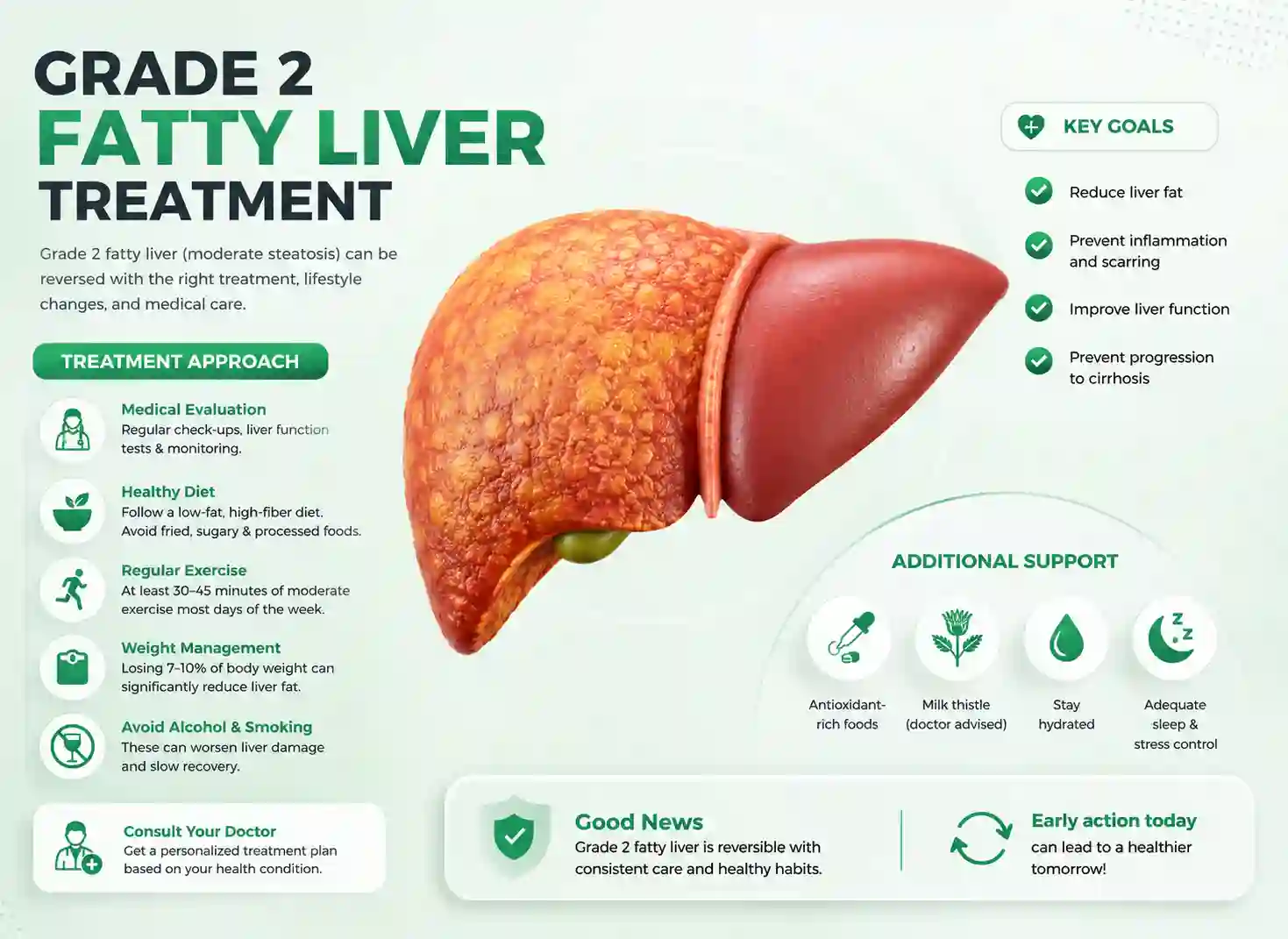
Grade 2 Fatty Liver Treatment - The Complete Evidence-Based Guide to Reversing Fatty Liver Disease

Being diagnosed with grade 2 fatty liver can feel overwhelming. You may worry about liver damage, future complications, or whether the condition is reversible. Here is the reassuring truth: 👉 Grade 2 fatty liver is usually reversible with the right treatment and lifestyle changes. This comprehensive guide explains exactly how to treat grade 2 fatty liver, using medically verified strategies supported by leading health authorities, so you can take confident, practical steps toward healing your liver.

5 min read
A
Written ByAdmin
Grade 2 Fatty Liver Treatment - The Complete Evidence-Based Guide to Reversing Fatty Liver Disease

What Is Grade 2 Fatty Liver?

Grade 2 fatty liver (also called moderate fatty liver) means fat has accumulated in 34–66% of liver cells. It is commonly part of a condition known as nonalcoholic fatty liver disease (NAFLD).

At this stage:

  • Liver inflammation may be present
  • Liver enzymes are often elevated
  • Damage is still potentially reversible

What Causes Grade 2 Fatty Liver?

Common contributors include:

  • Obesity or overweight
  • Type 2 diabetes
  • High cholesterol or triglycerides
  • Insulin resistance
  • Poor diet (high sugar & refined carbs)
  • Sedentary lifestyle
  • Excess alcohol consumption

According to National Institutes of Health, fatty liver disease affects nearly 25–30% of adults worldwide.

Is Grade 2 Fatty Liver Serious?

Yes—but manageable.

Without treatment, grade 2 fatty liver can progress to:

  • Nonalcoholic steatohepatitis (NASH)
  • Liver fibrosis
  • Cirrhosis
  • Liver failure

Early intervention dramatically reduces these risks.

Can Grade 2 Fatty Liver Be Reversed?

✔️ Yes, in most cases.

Leading institutions such as Mayo Clinic confirm that lifestyle-based treatment can significantly reduce liver fat and inflammation.

The liver has remarkable regenerative ability when harmful triggers are removed.

Grade 2 Fatty Liver Treatment Plan (Step-by-Step)

The most effective approach combines:

  • Diet modification
  • Physical activity
  • Weight management
  • Medical monitoring

There is no single pill that cures fatty liver. Treatment focuses on correcting underlying metabolic problems.

1. Best Diet for Grade 2 Fatty Liver

Your diet is the foundation of treatment.

Core Principles

  • Reduce added sugars
  • Lower refined carbohydrates
  • Increase fiber intake
  • Choose healthy fats

Recommended Eating Pattern

The Mediterranean-style diet consistently shows liver-protective benefits.

Best Foods to Eat

  • Leafy greens (spinach, kale)
  • Cruciferous vegetables (broccoli, cauliflower)
  • Whole grains (oats, brown rice, quinoa)
  • Fatty fish (salmon, sardines)
  • Olive oil
  • Nuts and seeds
  • Beans and lentils
  • Low-fat yogurt

Why It Works

  • Lowers insulin resistance
  • Reduces inflammation
  • Decreases liver fat storage

2. Foods to Avoid Completely

These accelerate fat buildup in the liver:

  • Sugary drinks
  • Sweets and desserts
  • White bread, pasta, pastries
  • Fried foods
  • Processed meats
  • Trans fats
  • Excess salt

World Health Organization links high sugar consumption to rising rates of metabolic and liver disease.

3. Best Exercises for Fatty Liver

Exercise improves liver fat even without weight loss.

Recommended Amount

  • 150–300 minutes per week of moderate activity
  • Strength training 2–3 days/week

Best Options

  • Brisk walking
  • Cycling
  • Swimming
  • Jogging
  • Bodyweight exercises

How Exercise Helps

  • Burns liver fat
  • Improves insulin sensitivity
  • Reduces inflammation

4. Weight Loss Targets for Liver Healing

Even modest weight loss is powerful.

  • 5% body weight loss → reduces liver fat
  • 7–10% loss → improves inflammation
  • ≥10% loss → may reverse fibrosis

Slow, steady loss is safer than crash dieting.

5. Medical Treatment & Medications

There is currently no FDA-approved drug specifically for NAFLD, but doctors may prescribe medications to treat related conditions:

  • Diabetes medications
  • Cholesterol-lowering drugs (statins)
  • Blood pressure medicines

According to Centers for Disease Control and Prevention, managing metabolic risk factors is critical for preventing liver disease progression.

6. Supplements: What Helps and What Doesn’t

Supplements with Some Evidence

  • Vitamin E (for select patients)
  • Omega-3 fatty acids

Use With Caution

Always consult a physician before starting supplements.

Not Recommended

  • Herbal “liver cleanses”
  • Detox teas
  • Mega-dose vitamins

These products may harm the liver.

7. Alcohol and Fatty Liver

If you have grade 2 fatty liver:

👉 Avoid alcohol completely.

Even moderate drinking increases inflammation and fibrosis risk.

8. How Long Does Recovery Take?

Typical timeline:

  • 3 months: liver enzymes begin improving
  • 6 months: significant fat reduction
  • 12 months: possible reversal

Consistency is key.

9. Signs Your Liver Is Improving

  • Lower ALT and AST levels
  • Improved ultrasound results
  • More energy
  • Reduced abdominal discomfort

Only lab tests and imaging can confirm improvement.

10. When to See a Doctor

Seek medical care if you experience:

  • Persistent fatigue
  • Yellowing of eyes/skin
  • Abdominal swelling
  • Unexplained weight loss

Regular monitoring every 6–12 months is advised.

Grade 2 fatty liver treatment is achievable, effective, and life-changing.

By adopting a healthy diet, exercising regularly, losing excess weight, avoiding alcohol, and managing metabolic conditions, most people can reverse fatty liver disease and protect their long-term health.

If you have been diagnosed, the best time to act is today. Partner with a healthcare professional and begin your recovery journey.

Medical Disclaimer

This article is for educational purposes only and does not replace professional medical advice. Always consult a qualified healthcare provider for diagnosis and personalized treatment.

Frequently Asked Questions

Common questions about this health blog answered for you

Yes, in rare cases after progression to cirrhosis. Early treatment greatly lowers risk.

Intermittent fasting may help some people, but consistency and balanced nutrition matter more.

Yes, but choose brown rice and limit portions.

Yes. Studies show 2–3 cups/day may protect liver cells.

Often no. Some people feel mild right-upper abdominal discomfort.

Need Medical Consultation?

Our expert doctors are here to help you with personalized care.

Book a Consultation
Grade 2 Fatty Liver Treatment: Best Diet, Exercise & Care | Nephro Care India